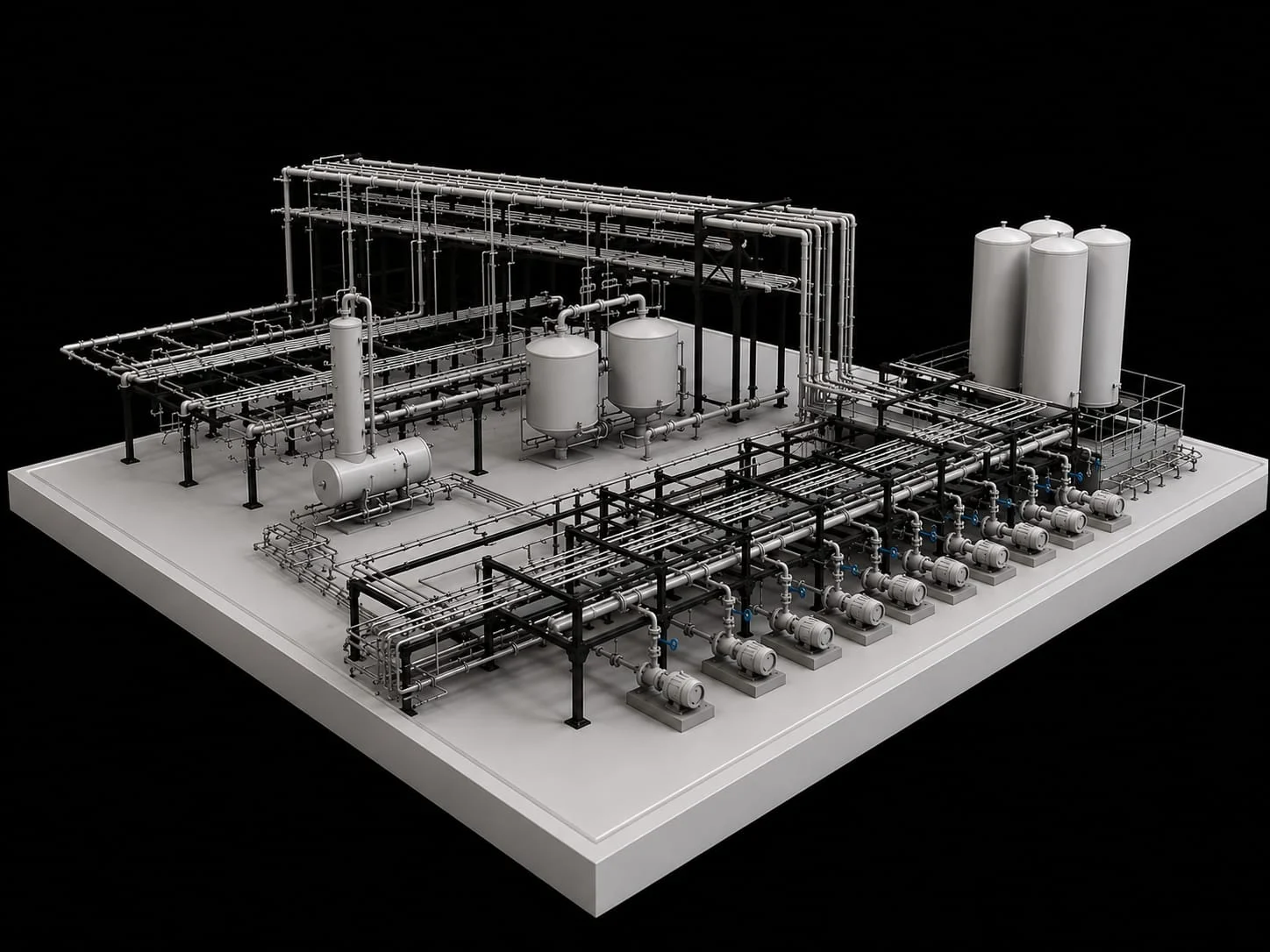
Process plants are dense, congested environments where a single misjudged clearance can create real safety and maintenance problems years after construction is complete. This is one of the main reasons an industrial piping model continues to hold a place in plant design and operations, even at facilities that already run fully on advanced 3D engineering software.
Safety Planning Starts With Understanding the Layout
Safety officers reviewing evacuation routes, fire water coverage, and emergency access need to understand a plant’s physical layout thoroughly, and a model makes that review significantly easier than working from stacked drawing sheets. Walking through a proposed layout physically helps identify blocked access points or insufficient clearance around critical shutoff valves before the plant is ever built.
Emergency response training also benefits from having a shared physical reference. New personnel and visiting contractors can be briefed on evacuation routes and hazard zones using a model far more effectively than through drawings alone, particularly during initial site inductions.
Maintenance and Operations Planning
Long after construction, plant operators continue to use this kind of physical reference for maintenance planning, particularly when scheduling shutdowns that require equipment removal or major pipe section replacement. Being able to see exactly how a section of pipe rack connects to surrounding equipment helps maintenance teams plan access and rigging requirements without repeated site visits.
Some facilities keep an updated model in a central operations room specifically for this purpose, treating it as a living reference that gets adjusted whenever piping modifications are made on site.
Coordination During Construction
During active construction, multiple contractors are often working on the same congested area simultaneously — civil teams pouring foundations, mechanical teams installing equipment, and piping contractors routing pipe racks overhead. A physical model in the site office gives every team a shared reference point, reducing the coordination errors that tend to occur when each contractor is working from their own set of drawings.
Project managers also use these models during progress reviews with clients, since a model makes it far easier to explain construction sequencing and current project status than a stack of drawing revisions.
Building an Accurate Model
Studios building an industrial piping model typically work directly from isometric drawings and P&ID documentation supplied by the engineering team, cross-checking pipe sizes, elevations, and fitting types carefully before fabrication begins. Colour coding follows the plant’s actual piping specification, so viewers can identify fluid services at a glance, just as they would on the real installation.
Durability matters more for these builds than for purely decorative pieces, since site office and training room use involves frequent handling. Sturdier materials and reinforced joints are generally worth the additional cost for models expected to remain in active use for years.
Getting Long-Term Value From the Build
Because these models continue to serve a purpose well after initial design approval, it makes sense to discuss long-term use with the model-making studio before the project begins. Ask whether sections can be updated individually as piping modifications occur on site, rather than requiring a full rebuild each time a change is made.
Facilities that invest in this kind of modular, updateable model tend to keep it in active use for a decade or more, adjusting sections as the plant itself evolves rather than treating the model as a one-time deliverable that becomes outdated within a few years.
Integrating the Model Into Regular Operations
Some plants formally incorporate this kind of build into standard operating procedures — requiring shutdown planning teams to review the model before finalising a maintenance schedule, or including a walkthrough of the model as part of every new contractor’s site induction. This kind of structured use ensures the investment continues to deliver value well beyond the initial design and construction phase.
Operations teams that adopt this habit often find they catch potential access or clearance issues during planning meetings rather than discovering them on the day of a scheduled shutdown, when delays are far more costly.
Working With the Right Studio
As with any technical build, the studio’s process matters as much as their craftsmanship. Confirm how they handle updates to an existing model, what documentation they retain for future reference, and how quickly they can turn around a section revision when a piping change needs to be reflected before an upcoming safety review or shutdown planning session.
A well-built industrial piping model ultimately pays for itself across design review, safety training, and years of operational use, making it one of the more practical investments a process plant can make during the design and construction phase.
Extending the Model’s Life With Simple Upkeep
Regular light cleaning, prompt repair of any loose or broken components, and periodic repainting of colour-coded sections keep a model functioning as a reliable reference rather than deteriorating into something that no longer matches the plant’s current configuration. Assigning informal ownership of the model to a specific department — often safety or engineering — helps ensure this upkeep actually happens rather than being forgotten amid day-to-day plant operations.
Facilities that treat this kind of build as a maintained asset, rather than a one-time deliverable, consistently report getting far more practical value from it across the years that follow its initial installation.
A Practical Investment for Any Process Facility
Whether the immediate goal is a smoother safety audit, fewer surprises during a maintenance shutdown, or better coordination between contractors on a live construction site, the case for a well-built physical model remains straightforward. It gives everyone involved, regardless of their technical background, a shared and accurate understanding of a plant that is otherwise very difficult to picture from drawings alone.